OpenAI Just Changed The Game Again: 6 Announcements That Will Transform AI Development
AgentKit, GPT-5 Pro, Sora 2, and ChatGPT app integrations. OpenAI's DevDay 2025 just redefined what's possible with AI. This is what you need to know.
Pavan Kumar
AI Consultant & Platform Engineer
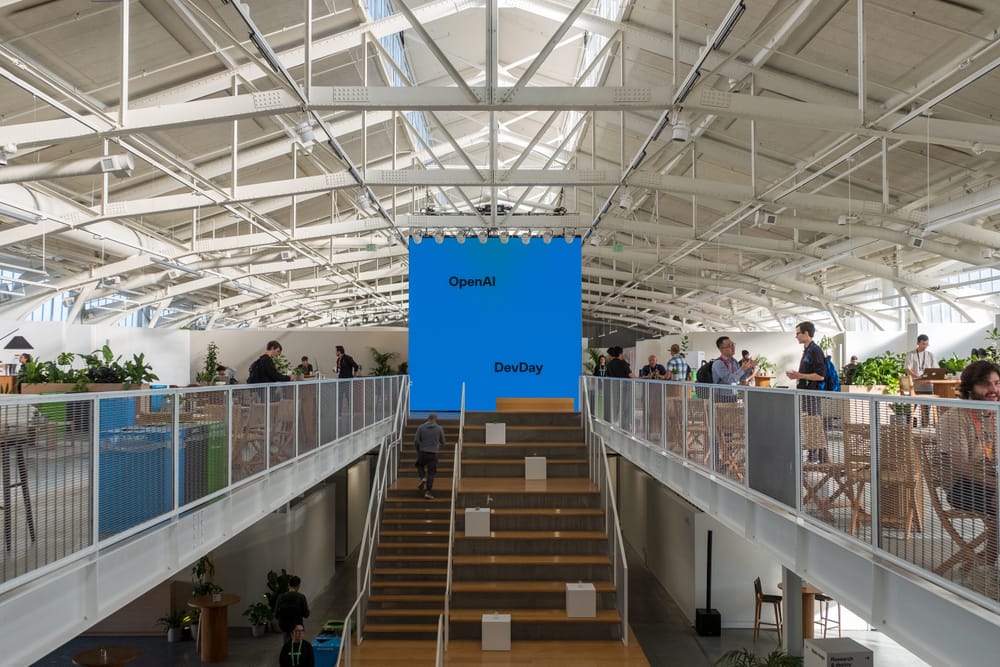
October 6, 2025. Sam Altman walked on stage at OpenAI DevDay and dropped six announcements that fundamentally changed the AI development landscape.
I watched the keynote live. By the time it ended, my entire roadmap for the next quarter had changed. What OpenAI just released isn't incremental improvement. It's a complete reimagining of how we build, deploy, and interact with AI.
This is what happened and why it matters.
The Six Announcements That Changed Everything
1. AgentKit: No-Code AI Agent Builder
The most impactful announcement. AgentKit is OpenAI's answer to the question: "How do we make AI agents accessible to everyone?"
What it is: A complete toolkit for building, deploying, and optimizing AI agents without writing code.
Why it matters: An OpenAI engineer built a fully functional AI agent in eight minutes during the live demo. Eight minutes. Not hours. Not days. Minutes.
Core Components
Agent Builder
- Visual drag-and-drop canvas (think Canva for AI agents)
- Pre-built logic nodes and workflow templates
- Custom guardrails configuration
- Direct competitor to Zapier, n8n, and Make
ChatKit
- Embeddable chat interface
- Drop into any app or website
- MCP-based architecture
- Full customization support
Evals for Agents
- Step-by-step trace grading
- Component-level performance testing
- Automated prompt optimization
- Cross-model evaluation support
Connector Registry
- Secure connections to internal tools
- Third-party system integrations
- Admin control panel
- Enterprise-grade security
What This Means For Developers
Sam Altman described Agent Builder as "like Canva for building agents." That's not hyperbole. This democratizes AI agent development in the same way Webflow democratized web development.
Before AgentKit:
- Weeks of coding, testing, infrastructure setup
After AgentKit:
- Minutes of visual configuration, instant deployment
Pricing:
- Aligned with standard API rates
- ChatKit and Evals are generally available
- Agent Builder is in beta
- Connector Registry entering beta for Global Admin Console users
2. ChatGPT Apps: Your AI Operating System
ChatGPT just became an app platform. Not a chat interface with plugins. An actual platform where apps run natively inside the chat.
Launch partners include:
- Figma
- Canva
- Zillow
- Spotify
- Booking.com
- Expedia
- Target
- Uber
- Instacart
- OpenTable
- DoorDash
- Peloton
- AllTrails
- Thumbtack
How It Works
Figma integration: Say "Figma, turn this sketch into a workable diagram" and Figma opens directly in ChatGPT, processes your request, and creates the design.
Canva integration: Upload a text document and say "Turn this into a pitch deck" and Canva generates a complete presentation inside ChatGPT.
Zillow integration: Ask "Find apartments in San Francisco under $3,000" and an interactive map with real listings appears in the chat.
This isn't linking out to apps. Apps run inside ChatGPT.
Technical Foundation
Built on the Model Context Protocol (MCP). OpenAI launched the Apps SDK in preview, enabling developers to build native ChatGPT apps.
Availability:
- All logged-in ChatGPT users (Free, Go, Plus, Pro) outside the EU
- English language at launch
- Pilot partners available in markets where their services operate
Market Impact
Figma stock jumped 16% during trading and closed up 7% the day of the announcement. The market immediately understood what this means.
ChatGPT is positioning itself as the interface layer for the entire internet.
3. GPT-5 Pro: Next-Level Reasoning and Automation
Released on August 7, 2025, GPT-5 is now the default model in ChatGPT. GPT-5 Pro takes it further with extended reasoning capabilities.
Automated Reasoning
The breakthrough: GPT-5 automatically applies reasoning when needed. You don't select different models for different tasks. The model decides.
How it works:
- Real-time router analyzes your prompt
- Evaluates conversation complexity, tool requirements, user intent
- Routes to fast model or deep reasoning model automatically
- Seamless experience, zero configuration
Performance Metrics
Reasoning Tasks:
- AIME 2025 math (without tools): 94.6%
- SWE-bench Verified coding: 74.9%
- MMMU multimodal understanding: 84.2%
- HealthBench Hard: 46.2%
Error Reduction:
- 45% fewer factual errors than GPT-4o (with web search)
- 80% fewer factual errors than o3 (with reasoning)
Efficiency:
- 50-80% fewer output tokens than o3
- Equivalent or better performance
- Faster response times
GPT-5 Pro Extended Reasoning
Available to Pro subscribers. In evaluations on 1,000+ real-world reasoning prompts:
- External experts preferred GPT-5 Pro 67.8% of the time
- 22% fewer major errors compared to standard GPT-5
Use cases:
- Finance, legal, healthcare
- Domains requiring high accuracy and depth of reasoning
4. Codex: Software Engineering Agent Now GA
Codex, OpenAI's software engineering agent, is now generally available with major upgrades.
New features:
- Slack integration
- Codex SDK for custom integrations
- Enterprise controls
- Powered by GPT-5-Codex model
What it does:
- Writes, debugs, and automates code with production-level quality
- Not code completion - actual software engineering
Target users:
- Developers, teams, enterprises
- Automated code generation and workflow automation
5. Sora 2: AI Video Creation Goes Mainstream
Released September 30, 2025. Sora 2 is OpenAI's answer to TikTok, YouTube Shorts, and Instagram Reels.
Key Capabilities
Technical improvements:
- More accurate physics simulation
- Sharper realism
- Synchronized audio generation
- Enhanced creative control
- Expanded stylistic range
Example use cases:
- Olympic-level gymnastics routines with accurate physics
- Backflips on paddleboards with correct buoyancy and rigidity modeling
- Complex movements that previous models couldn't handle
OpenAI calls it "the GPT-3.5 moment for video." That's the right comparison. This is the moment video generation becomes accessible and useful.
Cameo Feature
Upload a one-time video and audio recording. Sora 2 creates cameos (guest appearances) of you in generated videos. Identity verification built-in.
Use cases:
- Personalized marketing videos
- Training content featuring your team
- Social media content at scale
Availability & Pricing
Platform:
- sora.com and iOS app
Access:
- Invite-only rollout (US and Canada first)
Pricing:
- Free tier with usage limits
- ChatGPT Pro subscribers get Sora 2 Pro (higher quality model)
API access:
- Coming soon for developers
Safety Features
Every video includes visible and invisible provenance signals. Watermarks on all outputs at launch. Some users have already found workarounds (a reminder that safety is an ongoing challenge, not a solved problem).
6. Workspace & Tool Integration
OpenAI teased deeper tool integration and a workspace connecting teams, data, and tools in one unified platform.
What we know:
- Centralized workspace for AI workflows
- Data team collaboration features
- Universal tool connector
- Enterprise-grade admin controls
Status:
- Details limited at this time
- Vision: OpenAI wants to be the operating system for AI-powered work
What This Means For Different Audiences
For Developers
Opportunities:
- Build AI agents in minutes instead of weeks
- Ship apps that run inside ChatGPT (200M+ users)
- Leverage GPT-5 Pro for complex coding tasks
- Integrate Sora 2 for video generation features
Challenges:
- Competition intensifies (no-code tools democratize development)
- Vertical AI SaaS becomes harder to differentiate
- Speed of innovation requires constant learning
Action items:
- Experiment with AgentKit this week
- Apply for Apps SDK beta access
- Test GPT-5 Pro for your most complex tasks
- Explore Sora 2 API when available
For Startups & Founders
Implications:
- AI agent infrastructure is now commoditized (thanks to AgentKit)
- Distribution advantage shifts to ChatGPT platform
- Video content creation costs drop to near-zero
- Differentiation must come from domain expertise, not AI capabilities
Strategic questions:
- Can your AI SaaS be replicated in AgentKit?
- Should you build on the ChatGPT Apps platform?
- How does GPT-5 Pro change your product capabilities?
- Can Sora 2 replace your video production costs?
For Enterprises
Benefits:
- No-code AI deployment reduces IT overhead
- Enterprise controls for security and compliance
- Unified workspace for team collaboration
- API access for custom integrations
Considerations:
- Data privacy and governance
- Change management for AI adoption
- Training and upskilling requirements
- Vendor lock-in vs. flexibility
For Content Creators
Game-changers:
- Sora 2 eliminates video production barriers
- ChatGPT apps streamline content workflows
- AI agents automate repetitive tasks
- Higher output, lower costs
Risks:
- Content saturation increases competition
- Authenticity becomes key differentiator
- Platform dependency risk
The Bigger Picture: What OpenAI Is Building
These six announcements aren't independent products. They're components of a unified vision.
The strategy:
- Platform layer: ChatGPT becomes the interface
- Distribution layer: Apps run inside ChatGPT
- Development layer: AgentKit democratizes building
- Intelligence layer: GPT-5 Pro powers complex reasoning
- Creativity layer: Sora 2 enables video creation
- Integration layer: Workspace connects everything
OpenAI is building an operating system for AI-powered work.
Three Critical Questions
1. Can OpenAI Maintain This Pace?
Six major announcements in one day. Sora 2 launched days before DevDay. GPT-5 released two months ago.
Competitors (Anthropic, Google, Meta) are scrambling. But sustainability matters. Can OpenAI ship quality at this speed long-term?
2. Will Developers Accept Platform Lock-In?
Building on ChatGPT Apps means OpenAI controls distribution. AgentKit uses OpenAI infrastructure. That's power and risk.
Alternative: Build on open protocols and maintain independence. Trade-off: Slower distribution, more complexity.
3. What Happens to Vertical AI Startups?
If anyone can build an AI agent in eight minutes with AgentKit, what happens to specialized AI SaaS companies?
Survival strategies:
- Deep domain expertise
- Proprietary data
- Network effects
- Superior UX
- Regulatory moats
Generic AI wrappers won't survive. Defensible businesses will.
My Take: What You Should Do Now
Week 1: Experiment
- Sign up for AgentKit beta
- Build one test agent
- Explore ChatGPT apps (Figma, Canva, Zillow)
- Test GPT-5 Pro on your hardest problems
Week 2: Evaluate
- Can AgentKit replace part of your workflow?
- Should you build a ChatGPT app?
- Does GPT-5 Pro justify the cost?
- How can Sora 2 enhance your content?
Week 3: Decide
- Commit to one new tool
- Build a proof of concept
- Measure impact (time saved, quality improved)
- Scale or pivot
Month 2-3: Integrate
- Train your team
- Update workflows
- Deprecate obsolete tools
- Share learnings
The Possibilities I'm Most Hyped For
AgentKit: Finally, non-technical team members can build automation. This unlocks collaboration I've never seen before.
ChatGPT Apps: Imagine ChatGPT as your universal remote for software. One interface, every tool. That's powerful.
GPT-5 Pro: The reasoning quality is genuinely impressive. I tested it on architecture decisions that took me hours. It nailed it in minutes.
Sora 2: Video content has been a bottleneck for me. If Sora 2 delivers on the demos, that bottleneck disappears.
Codex: I want to see how far it can go. Can it handle full-stack development? Refactor legacy code? We'll find out.
Workspace: If done right, this could replace Slack + Notion + Linear. That's a big if, but worth watching.
What Didn't Get Announced (And Why It Matters)
GPT-5 for all tiers:
- Only Pro tier gets extended reasoning
- Pricing barrier remains
API pricing:
- No announcements on cost reductions
- Running GPT-5 Pro at scale is expensive
EU availability:
- ChatGPT Apps excluded from EU
- Regulatory challenges continue
Sora 2 API timeline:
- "Coming soon" isn't a date
- Developers are waiting
Open source GPT models:
- No open source version of GPT-5 announced
- Previous releases: Whisper, CLIP, GPT-OSS (August 2025)
- Core GPT models (GPT-4, GPT-5) remain proprietary
These gaps matter. They limit accessibility and create competitive openings.
Final Thoughts
OpenAI DevDay 2025 wasn't about incremental improvements. It was about redefining the entire AI stack.
What changed:
- Building AI agents: Weeks → Minutes
- Running apps: Browser tabs → ChatGPT
- AI reasoning: Manual model selection → Automatic optimization
- Video creation: Expensive production → Natural language prompts
- Code automation: Limited tools → Full engineering agent
- Team collaboration: Fragmented tools → Unified workspace
What didn't change:
- Quality matters more than quantity
- Domain expertise beats generic AI
- User experience is the differentiator
- Speed of execution wins
The tools got dramatically better. The fundamentals remain the same.
Your Next Steps
Don't just read about this. Act on it.
Today:
- Watch the DevDay keynote (link in resources)
- Sign up for AgentKit beta
- Test one ChatGPT app integration
This week: 4. Build your first AI agent 5. Try GPT-5 Pro on a complex task 6. Request Sora 2 access
This month: 7. Integrate one new tool into your workflow 8. Measure the impact 9. Share your learnings
The AI landscape just shifted. Adapt or fall behind.
Resources
Official OpenAI:
- OpenAI DevDay 2025
- Introducing AgentKit
- Introducing GPT-5 for Developers
- Sora 2 is Here
- Apps in ChatGPT and the Apps SDK
Technical Documentation:
News Coverage:
Let's Connect
What possibility are you most hyped for? AgentKit? GPT-5 Pro? Sora 2? ChatGPT apps?
Connect on LinkedIn Follow on GitHub
I'm tracking these announcements closely and sharing implementation guides as I experiment. Let's build the future together.
Found this helpful? Share it with a developer friend who needs to know about these game-changing announcements.
Tagged with